Where the wind is blowing: A global view on the future of gambling regulation
At IAGR2025 in Toronto, regulators from four continents gathered to share what’s really happening in their markets and where the pressure points are emerging.
In a time of accelerating innovation, international competition, and increased scrutiny, regulators find themselves at the centre of a fast-moving storm.
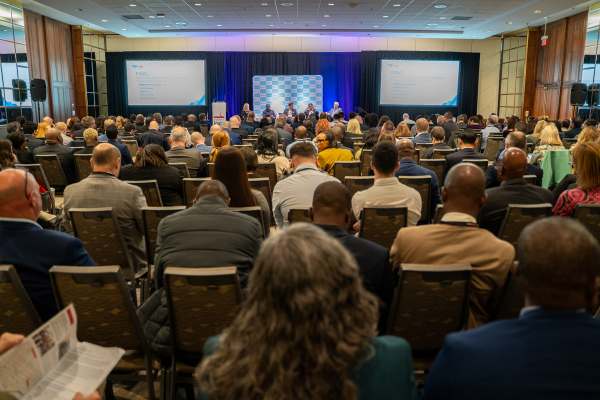
The IAGR2025 session ‘Where the wind is blowing: emerging trends and market dynamics’ brought together four experienced voices from Canada, Nigeria, Singapore and the Netherlands. The panellists spoke openly about the challenges, risks and opportunities shaping the future of gambling regulation.
Moderated by Peter Czegledy (Partner and Chair, The Gaming Practice, Aird & Berlis LLP, Canada), the panel featured:
- Dr Karin Schnarr, CEO and Registrar, Alcohol and Gaming Commission of Ontario, Canada
- Bashir Are, CEO, Lagos State Lotteries and Gaming Authority, Nigeria and IAGR Trustee
- Chun Ching Teo, Chief Executive, Gambling Regulatory Authority, Singapore
- Michel Groothuizen, Chairman, Netherlands Gambling Authority
Together, they delivered a fast-paced yet thoughtful discussion that covered key issues, including responsible gambling and AI, crypto, innovation and cross-border enforcement.
‘We’ve got what my kids refer to as a banger for you today,’ said moderator Peter Czegledy. ‘This is a real four-corners-of-the-world panel… we’re here to take the global pulse and maybe even some insight into what future trends might come down the road.’
Responsible gambling is an ongoing and evolving challenge
The conversation began with a subject that has long been central to regulatory agendas: responsible gambling (RG).
But far from being treated as a checkbox item, the panellists emphasised that RG is becoming more complex and more critical as markets evolve.
In Nigeria, Bashir Are (pictured below) stressed that prevention is at the heart of regulatory purpose.
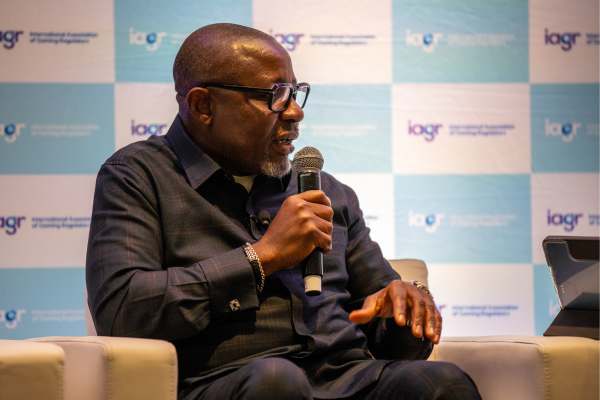
‘The main reason why we regulate is to control abuse. Gambling involves risk, money, psychology and the welfare of the society. So the main reason we regulate is the danger of gambling addiction or underage gambling.’
He spoke about the close collaboration and exchange of ideas between African regulators, ‘because injury to one is injury to all, and we have to protect our people.’
Bashir described several interventions, including the Safe Play self-exclusion platform in Nigeria and a unique public awareness initiative in Lagos.
‘We provide free Wi-Fi on the train, bus system… when you get on the bus or on the train, you get free Wi-Fi, but before you can do that…because we realise there’s a lot young people on the bus and adults who may be susceptible to addiction… there’s a video that you watch before you can access the free Wi-Fi.’
The initiative is backed by partnerships with mental health professionals to support people at risk.
From a Canadian perspective, Dr Karin Schnarr reflected on how the province’s approach to responsible gambling has evolved alongside its market.
With the opening of Ontario’s online gaming sector just three years ago, regulators have had to rethink traditional harm‑prevention tools and adapt them to new digital environments.
She stressed that effective regulation can’t happen in isolation. Schnarr described Ontario’s responsible‑gambling model as one built on collaboration between regulators, operators, researchers, and public‑health experts to ensure policies are grounded in evidence and practical insight.
She said it’s vital that ‘as the forms of gaming change… we evolve our RG tools related to that.’
The partnership model extends beyond industry to include researchers and specialists in addiction and mental health, ensuring that RG measures are both data‑driven and compassionate.
‘This is an evolving space, I think, for all of us. But we have to be proactive about it, not just to look as regulators on the punitive side.’
In Singapore, responsible gambling has been a central concern since the introduction of casinos. As Chun Ching Teo explained, political and public acceptance of casino gambling was contingent on the government taking a strong, proactive stance on harm prevention.
‘RG was a key area that we wanted to do well, because… it is the piece that politicians and the public [were] most concerned about when we wanted to introduce casinos.’
The result is a tightly regulated, state-led framework that includes mandatory entry levies for citizens and permanent residents, as well as a comprehensive national exclusion regime.
‘There’s self-exclusion, there’s family exclusion… a family member can apply to have you excluded. We have exclusion by law, which means that all bankrupts, all persons who are receiving financial assistance, all persons who are staying in government subsidised rental housing, are automatically excluded.’
The exclusion database is centrally managed and shared with both licensed casinos and the national betting operator.
Teo acknowledged that these measures may have unintended consequences, such as pushing excluded individuals toward illegal gambling. But he emphasised the importance of balance and noted that Singapore’s problem gambling rate remains low and stable.
Looking ahead, he is monitoring international developments to inform future enhancements.
‘I’m actually looking at how the Australian states are implementing carded play… it will be very interesting to see how well it is implemented and what’s the outcome they can achieve, because I think that is really a gold standard in RG.’
Sports betting: popular, visible — and a risk gateway
Although in some jurisdictions sports betting represents a smaller share of market revenue than other forms of gaming, it still dominates public and political attention.
‘It’s the sexy one,’ said Schnarr (pictured below). ‘It gets a lot of chatter, a lot of media attention. It’s only about 20% of our market, though.’
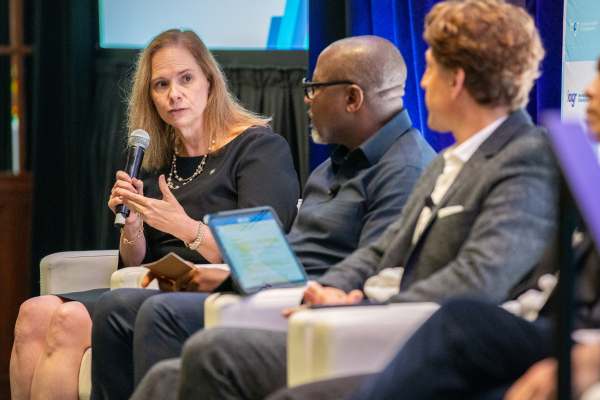
She acknowledged that sports betting is nothing new, but argued that bringing it into a legal, regulated system has created crucial new oversight capabilities.
‘Sports betting, let’s be honest, it’s been around forever… You go down to your corner bookie and you place a bet… It’s always been around.’
One of the clearest benefits of regulation, she said, is improved visibility into betting activity and stronger integrity protections. She pointed to a recent incident involving a Toronto basketball player who was found to have placed bets on games — a violation of league rules.
‘They found that out because we’re in a regulated market… there are integrity monitors now watching for very small betting amounts. You would have never normally caught that type of activity.’
Because those monitors are tracking data in real time and looking for patterns, regulators and operators were able to detect something that would have gone unnoticed in the grey market.
‘It allows us to un-surface some of these challenges… and that’s why I’m such a huge fan of a regulated market… it just gives you more tools as a regulator to act on it.’
We heard in the Netherlands that sports betting is one of the most concerning access points into gambling, particularly for young people.
‘It seems to be the entrance to the gambling market… especially for young adults and minors who are not allowed to gamble at all,’ said Michel Groothuizen.
He warned that although underage gambling is illegal and technically difficult to access through licensed channels, young people are still participating, often informally, at school or through sports clubs, or by using someone else’s account.
‘More than 20% of our minus-18 youngsters… have participated in it one way or another… through illegal operators or by using accounts of their bigger brothers or parents.’
Groothuizen said that the issue often begins in the home, much like underage drinking, and this makes it harder for regulators to enforce.
‘It’s often difficult for the government to look behind the door of a family… and up to a certain level, that’s the same with gambling.’
He linked this to the illegal market, noting that sports betting is not only a gateway for young users but also a pathway into unlicensed gambling environments.
In Nigeria and across much of Africa, sports betting is the dominant form of gambling, driven by a young, mobile-connected population and deep passion for sport.
‘Our population below 35 years old is at least 400 million people,’ said Bashir Are. ‘And because of the passion for sport on the continent, especially football… that passion has been transferred now to sport betting.’
In Nigeria, sports betting now accounts for the majority of gambling activity.
Are pointed to improved internet infrastructure and cheaper mobile devices as major accelerators of access and risk.
‘In the last five to eight years, we have at least seven transatlantic broadband connections into West Africa. So the data has become cheaper and phones have become cheaper.’
The result is an explosion in online gambling, particularly among young people. And because much of this activity crosses national borders, it creates significant regulatory challenges.
‘Because it’s online and it’s international… that has really amplified the need for collaboration and partnership with regulators from other jurisdictions.’
Are called for more international MOUs between regulators, better use of shared technology for KYC and monitoring, and a unified approach to combating illegal offshore operators and underage gambling.
Cryptocurrency: growing fast, regulated slowly
Cryptocurrency use in gambling is growing globally, and regulators are watching closely, even if few are actively regulating it yet.
In the Netherlands, crypto is banned within the licensed gambling market, but that may not hold.
‘Crypto gambling is forbidden, at least on the licensed market… [but] I think we will be forced to change our policy,’ said Michel Groothuizen (pictured below).
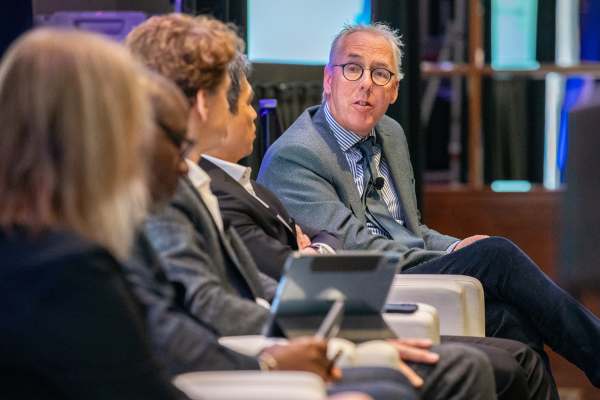
He described the current approach as increasingly out of step with market realities.
‘That might… become more and more kind of ostrich policy… more than 30% of the young adults already have crypto accounts… and as long as we continue making it impossible on the legal markets… they have to go to the illegal market.’
He warned that while 90% of Dutch players still use licensed platforms, half of the money spent on gambling may already be flowing to unregulated operators, many of which accept crypto.
In West Africa, the issue is even more immediate. Nigeria ranks among the highest countries globally for crypto transaction volumes, and crypto betting is already a known challenge for enforcement teams.
‘Crypto is a huge problem,’ said Bashir Are. ‘Nigeria alone is in the top five when you look at the cryptocurrency transaction volume.’
‘We use AI to detect some cryptocurrency betting through our enforcement team… Most operators in the black market, they accept cryptocurrency for betting.’
He added that regulation is still catching up, and in some regions, the lack of crypto-specific rules creates legal ambiguity.
‘If there is no regulation, that means they are not committing any crime… Regulations are in process.’
In Singapore, the situation is more contained. Regulated operators do not currently accept crypto for deposits or payouts, and there’s little evidence of widespread crypto use in the illegal market either.
‘As far as regulated operators are concerned… they don’t have any tie-ups for crypto buying in and cashing out yet,’ said Chun Ching Teo.
‘I have not heard of anything that suggests that it’s a big part of the illegal market… those are all cash-based, or just bank transfers.’
AI: a tool with potential and limits
AI is rapidly becoming part of the regulatory conversation, not only as a tool for enforcement and analytics, but also as a potential source of harm when misused by operators or over-relied upon by regulators themselves.
In Singapore, AI adoption is already underway on several fronts, but regulators are proceeding with caution. Chun Ching Teo explained that his organisation is developing clear guidelines to help operators understand where AI use could cross ethical lines.
‘We are working out a set of guidelines on what not to use AI for… especially if it becomes exploitative.’
Teo noted that operators are already applying AI in areas such as marketing and customer service, but his organisation encourages responsible use in more sensitive areas, such as AML detection and harm prevention.
Internally, the regulator is exploring how AI could support supervisory functions including data analytics, anomaly detection, licensing processes, and policy reviews, while still respecting government standards on fairness, transparency and security.
But he also raised an unexpected warning: regulators themselves must be careful not to rely too heavily on AI, lest they lose critical human judgment.
‘There’s a credible study that suggests that doctors who use AI… their own skills have decreased. So you need ‘AI fasting’, in order to make sure your people… do not [let] their own skills… deteriorate.’
In Ontario, Karin Schnarr highlighted two sides of AI: its potential to modernise outdated regulations and its role in uncovering digital deception in gambling products.
She described how AI could help regulators conduct large-scale reviews of existing rulebooks, for example, by scanning hundreds of pages of outdated regulation to identify overlap, duplication or irrelevance.
‘Where can you use AI to… say where there’s overlap, where there’s duplication… where things just aren’t even relevant anymore?’
She also flagged the rise of AI-generated or automated gameplay in esports and online poker — such as bots playing against bots — raising new questions around fairness and integrity.
Enforcement and cross-border collaboration
As regulated markets expand, enforcement has become both more complex and more collaborative.
Panellists agreed: regulators can no longer just police those within the system. They must also find creative ways to deter and disrupt illegal operators working outside of it.
Karin Schnarr described Ontario’s shift in approach. While regulators have traditionally focused only on licensed entities, pressure from legal operators — who pay significant fees to comply — has forced a broader view.
‘We are the regulator. We deal with those who are regulated… [but] what we heard from our registrants is that we have a role [to address the illegal market] as well.’
Without direct authority over unlicensed operators, the AGCO has focused on targeting those who enable illegal gambling, especially online platforms. One of its biggest successes has been with Meta.
‘If you’re an illegal igaming site, you may have a presence on Facebook or Instagram… we reached out to Meta and said: here are the 50 legal operators in Ontario, and here’s a list of the top 10 illegal ones.’
‘Shout out to Meta — they went and… now if you go to some of those sites, it literally says: “In conversations with the AGCO, this is not a licensed and legal operator,” and you can’t access it.’
She noted that similar conversations are now underway with app stores and digital ad platforms, which also serve as enablers.
Bashir Are shared that Nigeria is taking a similar path, including engaging directly with Meta and Google.
‘We give them a list of illegal operators in our environment — just exactly what you are doing.’
His organisation is also expanding cross-border cooperation through memoranda of understanding with other regulators, including Malta and the UK. It is pushing for deeper continental collaboration to address shared challenges.
‘Let us help each other… so we can reduce the number of illegal operators and protect consumers.’
In Europe, said Michel Groothuizen, regulators are slowly but surely recognising that they’re fighting the same fight and can’t do it alone.
‘We are more and more realising that we are facing the same problems… [and] we should join forces.’
But the reality is still complex. Fines go unpaid. Enforcement powers stop at national borders. Illegal operators exploit the gaps.
To address this, the Netherlands has launched a domestic enforcement alliance, bringing together regulators, licensed operators, financial institutions and tech companies to share intelligence and accelerate action.
‘It’s the legal market that is firing this initiative… because they see that only when we are able to really hit the illegal market, it’s reasonable for them to stay and invest in the Dutch market.’
Looking ahead: a call for responsibility and collaboration
As the session drew to a close, Peter asked each panellist what regulators should be paying more attention to in the months and years ahead.
For all four, the answer was clear: responsible gambling must remain front and centre, especially as digital products and online platforms continue to evolve faster than regulation.
‘It’s not really a sleeper issue,’ said Karin Schnarr, ‘but we need to lean into it much more aggressively than I think we as regulators may have done in the past.’
Bashir Are agreed, warning that if neglected, RG failures could damage entire markets.
Chun Ching Teo added that the use of AI in marketing and customer targeting introduces fresh risks regulators can’t afford to ignore.
And Michel Groothuizen left the room with a reminder: no regulator can do this alone.
‘We all have limited capacity… It would be very useful for us to make use of the investigations and data from our colleagues in other jurisdictions.’
In a fast-changing global market, that kind of collaboration may prove just as important as any law or license.